
Damp is almost always behind mould, rot and poor air quality. Painting over it never lasts. Our moisture testing finds where moisture is getting in or building up — and why — so the fix actually holds.
What's included
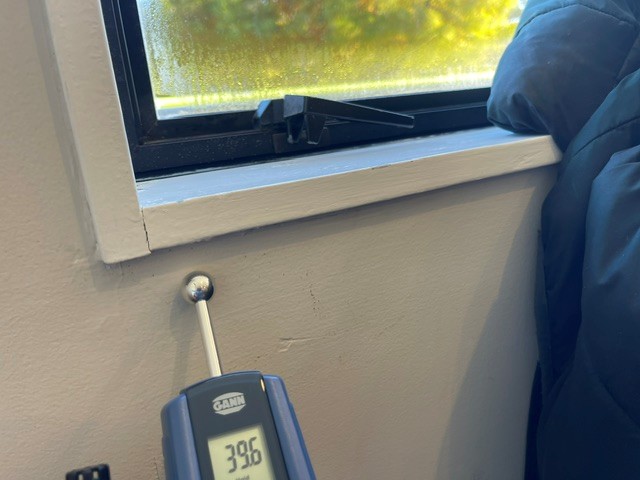
- Non-invasive moisture readings across walls, floors and ceilings
- Thermal imaging to reveal hidden damp and leaks
- Temperature and relative humidity readings, and a building envelope assessment
- Root-cause diagnosis — where the moisture is coming from
- Practical recommendations and, if needed, a remediation plan
Where the moisture comes from
In New Zealand buildings, the usual causes are:
- Failed flashing around windows, doors, roofs and penetrations
- A leaking pipe — often slow, hidden inside a wall or under a floor
- Lack of ventilation — bathrooms, kitchens and laundries without effective extraction, and homes that are rarely aired
- Condensation — cold surfaces meeting warm, humid indoor air, especially on windows and external walls
- Ground moisture — damp subfloors without a moisture barrier, and poor drainage around the building
- Flooding — major weather events
- Cladding and roof defects — moisture getting behind the outer layer
A damp assessment tells you which one it is. Fixing the wrong one costs money and leaves the mould in place.
Non-invasive and invasive moisture testing
Most of our work is non-invasive: calibrated meters and thermal imaging, with no damage to linings. Where readings point to a problem inside the wall or framing, invasive moisture testing — small probes into the timber — confirms how wet it is and how far it has spread. We can also go further where needed — for example, small cuts in plasterboard — but we'll always review this with you beforehand.
Moisture and mould assessment together
Moisture and mould go hand in hand. If there's visible mould or a musty smell, we combine moisture testing with mould testing, so you get the source and the consequence in one report.
For builders and project managers
- Moisture checks before linings close up
- Assessment after leaks, flooding or weather events during construction
- Independent evidence on weathertightness issues and defects
- Clear findings your remediation contractor can quote from
For homeowners, landlords and tenants
Recurring condensation, a damp smell, peeling paint or a cold, wet room all point to moisture. Our moisture assessment finds the cause, and gives you practical steps — from ventilation changes to repairs. For rentals, it also helps with Healthy Homes ventilation and moisture requirements (see Healthy Homes assessments).
Why the source matters
Treating mould without fixing the moisture is money wasted. Our assessments focus on the cause, giving you a durable solution rather than a temporary cover-up.
Common questions
What's the difference between moisture testing and mould testing?
Moisture testing finds the damp and its cause. Mould testing identifies the mould and how much there is. They're often done together.
Will moisture testing damage my walls?
Usually not. Most readings are non-invasive. If invasive testing is needed, we'll explain why and agree it with you first.
Can you find a hidden leak?
Thermal imaging and moisture mapping often locate it, or narrow it down enough for a plumber or builder to fix it.
How do I stop condensation?
Usually by reducing indoor humidity and improving ventilation and heating. Our report gives practical steps for your building.