
The air inside can be several times more polluted than the air outside — and you can't always see or smell the problem. Our indoor air quality testing measures what's actually in the air you breathe, so you can make informed decisions about health and comfort.
Every test is carried out by one of our own consultants and peer-reviewed by New Zealand's only ACAC Certified Microbial Investigator — the country's specialist in mould air testing.
What we test for
- Airborne mould spores and fungal fragments — including the type, and whether it's allergenic or toxigenic
- Particulates and dust
- Temperature and relative humidity — the conditions that drive mould growth and condensation
- Carbon dioxide (CO2), a useful indicator of ventilation, and volatile organic compounds (VOCs) from paints, furnishings and cleaning products — on request, confirmed before the visit or added as a follow-up
- Comparison against an outdoor sample taken at the same time, and relevant guidance
How mould air testing works
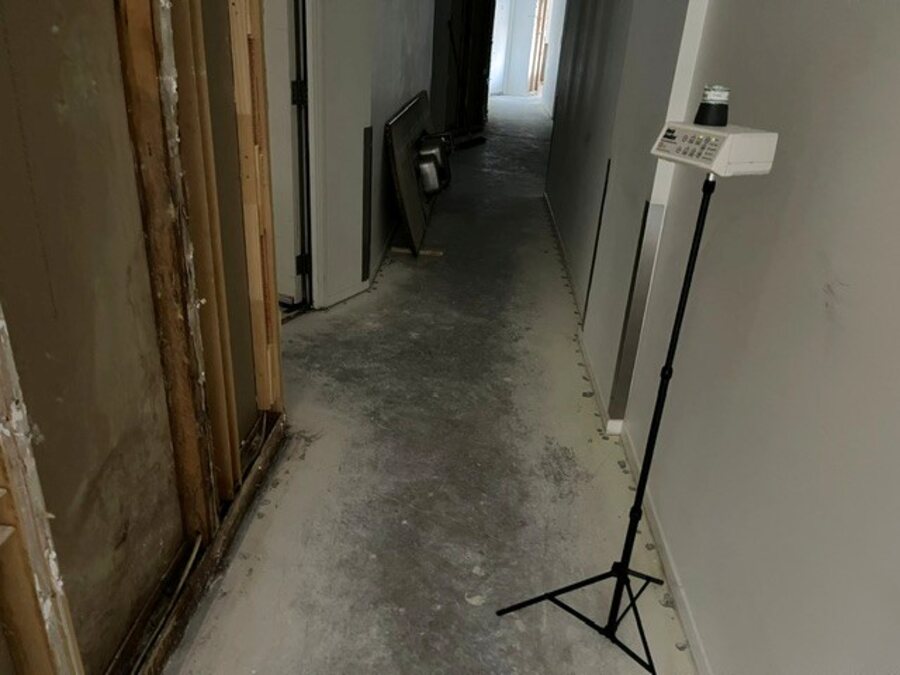
We collect a sample of the air itself and take it to the laboratory. We sample the rooms that matter — where you sleep, where the smell is, where people are unwell — and we always take an outdoor sample at the same time.
The outdoor sample matters because spores are everywhere outside. An indoor result means little on its own. Read against the outdoor air on the same day, it tells you whether something inside the building is adding to it.
You only pay for the outdoor sample to be analysed if it's needed — usually when the indoor result is borderline. If it is needed, we'll let you know the cost before we confirm for analysis. The sample is stored appropriately, so it can still be analysed later — for an insurance claim, for example.
What your results tell you
Is the microbial makeup inside ok, not ok, or borderline? And if it's borderline, could that be due to the outdoor environment?
That's the question our mould air quality testing answers. Your report also covers:
- Which types of mould are airborne, and whether they're allergenic or toxigenic
- Whether the indoor air points to hidden growth somewhere in the building
- Temperature and humidity conditions, and what they mean for condensation and mould
- What to do next
Initial results within 48 hours (24 hours if urgent), with the written report typically within five working days of the site visit.
Temperature and humidity testing
High indoor humidity is behind much of the condensation and mould in New Zealand homes. We measure temperature and relative humidity on every site visit, so the air quality result comes with the conditions that explain it. Where a pattern matters — overnight condensation, a cold bedroom, a poorly ventilated apartment — we can log temperature and humidity over several days.
Where indoor air quality testing helps
- Homes with damp, musty odours, or occupants with asthma or allergies
- Rentals — independent evidence for landlords, tenants and property managers
- Workplaces and offices — staff complaints, after leaks, or as part of health and safety
- Schools and early childhood centres
- Healthcare and aged care
- After renovation or remediation — confirming the air is back to normal (see validation testing)
Workplace indoor air quality
Backed by a leading NZ hazardous materials consultancy, our air quality work sits alongside deep expertise in asbestos, dust and contaminant monitoring — so we understand the building science and indoor environments as a whole. For employers, an independent assessment helps you respond to staff concerns with evidence, not guesswork.
Why choose us as your indoor air quality specialist
- New Zealand's only ACAC Certified Microbial Investigator
- Independent — we don't sell air purifiers, treatments or remediation
- Outdoor sample always collected, so results can be read properly
- Initial results within 48 hours (24 hours if urgent)
Common questions
Is air testing better than surface testing?
They answer different questions. Surface sampling identifies visible growth. Air quality sampling shows what you're breathing and can point to hidden growth. We'll recommend what fits your situation.
Why do you take an outdoor sample?
Because spores are always present outside. The outdoor sample is the baseline that lets us say whether the indoor air is ok, not ok or borderline.
Will an air purifier fix a mould problem?
It can reduce airborne spores, but it won't stop mould growing. Fixing the moisture source is what solves it. A purifier can sometimes make a space usable before remediation, but that depends on the conditions and other factors, so it's best to review with a consultant first.
Do DIY air test kits work?
They can't compare indoor air with outdoor air, so they can't tell you whether levels are normal.